Indian Mirchi (Chillies) — Varieties, Uses & Regional Significance
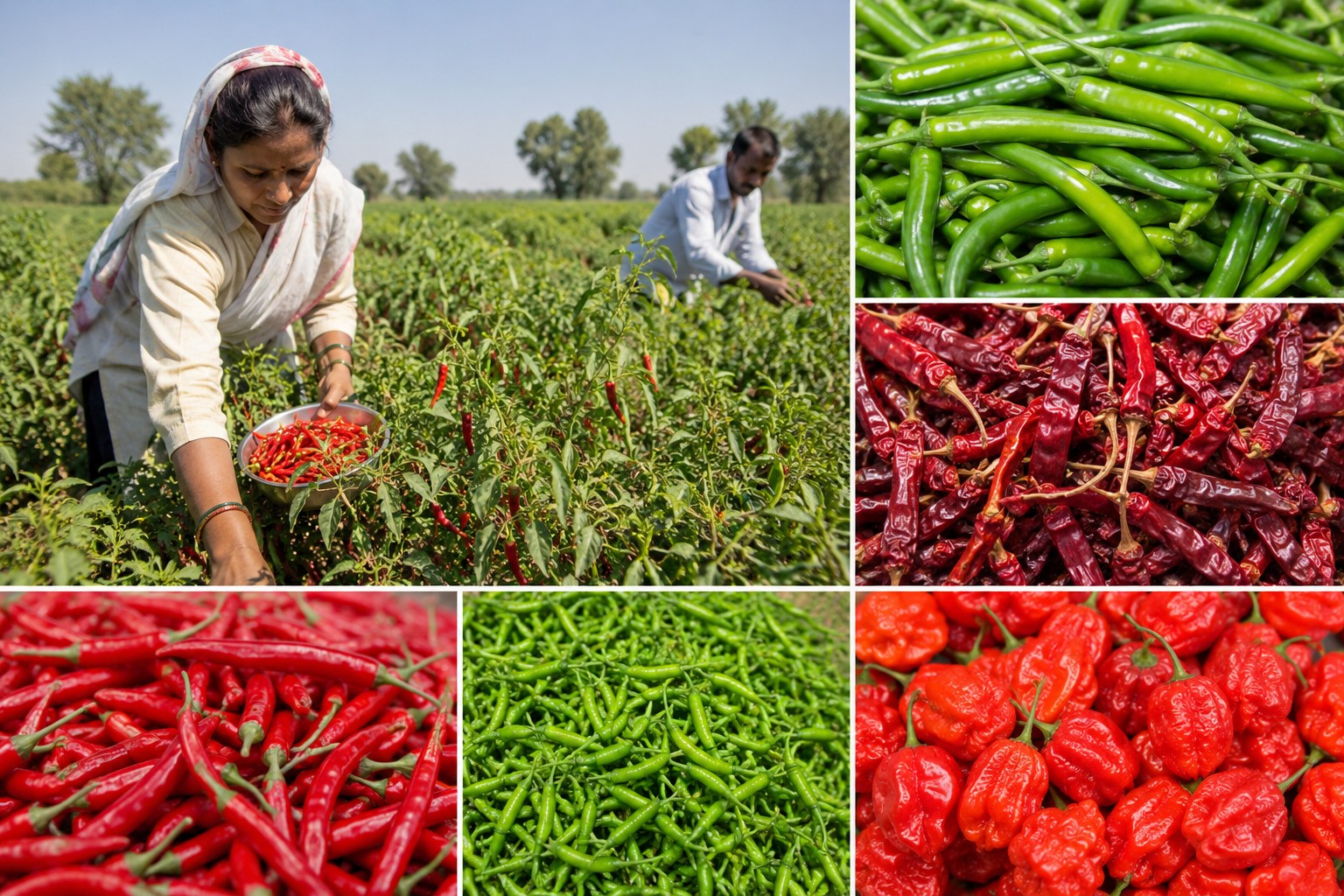
India is the world's largest producer, consumer, and exporter of chillies. With over 400 varieties grown across the country, each region has its own signature mirchi that defines its cuisine. Here's a comprehensive guide to the most important ones.
1. Kashmiri Mirchi (Deggi Mirch)
Origin: Jammu & Kashmir | Heat: Very Mild (1/5)
Kashmiri mirchi is prized almost exclusively for its intense, deep-red colour rather than heat. It has a mildly sweet, fruity flavour profile.
Uses: Rogan Josh, butter chicken, tandoori marinades, and any dish where a vibrant red colour is needed without burning heat. Widely used in commercial spice blends and restaurant cooking across India.
2. Byadagi Mirchi (Kaddi / Dabbi)
Origin: Karnataka | Heat: Very Mild (1/5)
One of the most expensive chilli varieties in India, Byadagi comes in two sub-types — Kaddi (long, wrinkled) and Dabbi (short, round). Known for high colour yield and low pungency.
Uses: South Indian curries, MTR-style sambar powder, red chutney bases, and as a natural food colouring agent. A staple in Karnataka, Goa, and coastal Andhra cuisine.
3. Guntur Sannam S4
Origin: Andhra Pradesh (Guntur) | Heat: Hot (3/5)
The most commercially traded chilli in the world. Guntur district produces nearly 30% of India's total chilli output, and the Sannam S4 is its flagship variety — balancing heat, colour, and aroma.
Uses: Andhra gravies, avakai (mango pickle), spice powder blends, and paprika/oleoresin extraction. Heavily exported to the USA, China, and Sri Lanka.
4. Teja Mirchi (S17)
Origin: Andhra Pradesh (Guntur) | Heat: Super Hot (5/5)
Teja is one of the hottest commercially grown chillies in India. It has a thin skin, high capsaicin content, and a sharp, penetrating heat. It is India's top export chilli by volume.
Uses: Gongura chicken/mutton, Nellore-style fiery curries, chilli oleoresin extraction, and as a base for industrial spice blends and hot sauces worldwide.
5. Jwala Mirchi (Finger Chilli)
Origin: Gujarat | Heat: Hot (3/5)
Jwala means "flame" in Sanskrit — and this long, thin green chilli lives up to its name. It is the most popular fresh green chilli in North and West India.
Uses: Gujarati thepla and shaak, stuffed mirchi snacks, pickles, chutneys, and everyday tadka/tempering. Also used widely in Rajasthani and Punjabi home cooking.
6. Kanthari Mirchi (Bird's Eye Chilli)
Origin: Kerala | Heat: Super Hot (4/5)
Small but ferocious. Kanthari (white or red) is a tiny chilli that packs disproportionate heat. It is deeply embedded in Kerala's culinary tradition.
Uses: Kerala fish curries, kanthari chutney, pickles, and Chettinad-style dishes. The white variety is considered more potent than the red.
7. Naga Mirchi / Bhut Jolokia (Ghost Pepper)
Origin: Nagaland, Assam, Manipur | Heat: Extreme (5/5)
Bhut Jolokia held the Guinness World Record for the world's hottest chilli from 2007 to 2011, and it remains among the top five globally. It has a complex fruity flavour underneath the intense heat.
Uses: Naga pork curry (the dish it was born for), traditional Naga chutneys, bhut jolokia pickle, and — outside the kitchen — as an ingredient in military-grade pepper spray formulations. Handled with care even by locals.
8. Mathania Mirchi (Rajasthani Red)
Origin: Mathania village, Rajasthan | Heat: Medium (2/5)
Mathania is the soul of Rajasthani cuisine. It has a rich red colour, mild-to-medium heat, and a distinctive earthy aroma that no substitute can replicate.
Uses: Laal Maas (the dish is defined by this chilli), Rajasthani curries, mirchi bada stuffing, and premium spice export. Authentic Laal Maas recipes insist on Mathania over any other variety.
9. Ramnad Mundu (Button Chilli)
Origin: Tamil Nadu (Ramnad district) | Heat: Medium (2/5)
A short, round chilli with a GI (Geographical Indication) tag, Ramnad Mundu is highly aromatic with moderate heat and is central to Tamil Nadu's spice trade.
Uses: Chettinad curries, pepper crab, Tamil sambar powder, and dry chilli tempering. Its compact shape makes it ideal for whole dry roasting.
10. Warangal Chapatta (Flat Chilli)
Origin: Telangana | Heat: Hot (3/5)
Named for its distinctively flat, wide shape, Chapatta offers a good balance of heat and colour. It is a key ingredient in Telangana's rustic, bold cooking style.
Uses: Telangana chicken curries, kodi pulusu (chicken stew), and spice powder blends where both heat and colour contribution are needed.
11. Mundu / Yendalu (Round Chilli)
Origin: Andhra Pradesh | Heat: Medium (2/5)
A plump, round green chilli that is mild enough to eat stuffed or batter-fried whole. This is the chilli behind one of India's most beloved street snacks.
Uses: Mirchi bajji and mirchi pakoda (the iconic street snack), stuffed chilli recipes, Andhra chutneys, and tempering.
Quick Reference Summary
| Variety | Origin | Heat | Best Known For |
|---|---|---|---|
| Kashmiri Mirchi | J&K | Very Mild | Colour in curries |
| Byadagi | Karnataka | Very Mild | Sambar powder, colour |
| Guntur Sannam S4 | Andhra Pradesh | Hot | Global spice trade |
| Teja S17 | Andhra Pradesh | Super Hot | Export, oleoresin |
| Jwala | Gujarat | Hot | Green chilli tadka |
| Kanthari | Kerala | Super Hot | Fish curries, chutney |
| Bhut Jolokia | Nagaland/Assam | Extreme | Naga pork curry |
| Mathania | Rajasthan | Medium | Laal Maas |
| Ramnad Mundu | Tamil Nadu | Medium | Chettinad cuisine |
| Warangal Chapatta | Telangana | Hot | Kodi pulusu |
| Mundu/Yendalu | Andhra Pradesh | Medium | Mirchi bajji |